Hospitals pulse with anxiety. Every corridor decision matters. A single wrong turn can spiral into missed appointments, delayed treatments, mounting frustration.
Patients arrive vulnerable. They need clarity, not confusion. Yet countless visitors still get lost daily. Staff waste time giving directions instead of providing care.
Properly designed hospital signage cuts through confusion, reduces stress, builds confidence from the moment someone enters.
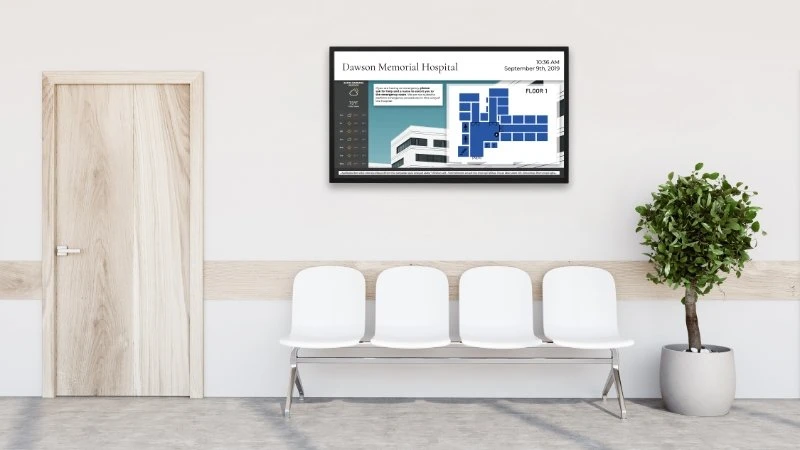
The Australian Commission on Safety and Quality in Health Care has documented something crucial: wayfinding problems don't just frustrate people, they damage entire hospital operations.
Lost patients create cascading problems. Emergency situations become dangerous when people can't locate exits quickly.
With 8.8 million emergency department visits in Australia during 2023-24 – over 32% of the population – navigation problems affect massive numbers of people.
Each lost person creates delays, frustration, unnecessary strain on stretched resources.
Answer: Beyond patient frustration, navigation problems cost hospitals thousands annually through operational inefficiencies. The numbers tell a stark story. Every day, staff members lose 15-20 minutes to giving directions. That's time stolen from patient care. Missed appointments ripple outward. Scheduling gaps. Lost revenue. Longer waits for everyone else.
But here's the real danger: emergency response suffers when visitors can't find exits fast enough. Security calls spike as frustrated families search desperately for loved ones.
And here's what hospitals often miss: patient satisfaction scores track directly with how well people can navigate the building. Poor wayfinding doesn't just annoy people. It damages reputations. It affects government funding.
Answer: Simplicity wins over sophistication. High-contrast colours beat subtle choices. Clear symbols communicate faster than text. Simple fonts outperform stylistic elements.
Design priorities include:
Answer: Think about who walks through hospital doors. An 80-year-old with cataracts can't read small text. A stressed parent carrying a sick child doesn't have time for complex instructions. Someone whose first language isn't English relies on symbols more than words. Children respond better to pictorial symbols than written directions. International visitors rely heavily on universal symbols and colour coding.
Emergencies change everything. People move fast, panic clouds judgement, every second counts. Signs must work from every angle. Wheelchair users sitting lower need different sight lines than standing visitors.
Family members under stress can't process complex information. They need the essential facts first: where to go, how to get there, what comes next.
Answer: Multiple Australian standards govern hospital signage, each with specific requirements.
The National Construction Code mandates specific signage standards including Braille elements, evacuation maps, critical area identification.
Here's what AS 1428.1 demands: contrast ratios that actually work, tactile elements people can feel clearly, mounting heights between 1200-1600mm. No compromises.
When the power fails, emergency signage can't fail too. Photoluminescent materials glow in darkness. Battery backup systems keep exit signs bright when everything else goes dark.
Post-COVID changed everything about infection control. Materials face daily chemical assaults from disinfectants. Cheap signs don't survive. Quality ones do.
Answer: Healthcare facility inspections examine signage systems thoroughly. Picture this: inspectors arrive with photometers to check contrast ratios. They measure mounting heights down to the millimetre. Emergency lighting gets tested to destruction.
Fail the inspection? Conditional approval only. Mandatory fixes before anyone can use the building. Serious violations shut down entire facility openings. Revenue stops. Patients get turned away.
The paperwork never ends: material specifications, installation records, maintenance schedules. Health department inspectors want proof of everything.
Answer: Standard signage materials fail within months under healthcare conditions. Daily disinfectant cleaning, foot traffic, wheelchair impacts, UV exposure destroy inferior products.
Proven materials include:
Material choice affects both immediate functionality and years of service life.
Answer: Hospital cleaning protocols use harsh chemicals destroying standard adhesives, inks, protective coatings. Quaternary ammonium compounds, bleach solutions, alcohol-based cleaners require materials specifically engineered for medical environments.
Surface textures matter significantly. Here's the reality: smooth surfaces win the cleaning battle. Germs hate non-porous materials. But textured surfaces? They look good in design presentations. In practice, they become contamination traps.
Watch what happens to mounting systems over time. Repeated cleaning attacks screws, brackets, adhesives. Loose mounts create gaps. Gaps collect germs. The cycle continues.
Answer: Combination approaches work best. Traditional signs provide reliable wayfinding while digital displays handle dynamic information.
Digital capabilities include:
Integration matters more than technology choice. Digital elements complement rather than replace fixed systems.
Answer: Digital displays in healthcare environments face unique challenges. Constant lighting, cleaning requirements, electromagnetic interference from medical equipment affect performance.
Battery backup systems ensure emergency messaging continues during power failures. Network redundancy prevents communication breakdowns during critical situations.
Screen brightness adjustment accommodates different lighting conditions throughout facilities. Anti-microbial screen treatments reduce pathogen transmission through touch interfaces.
Hospital signage projects involve multiple stakeholders, tight deadlines, zero error tolerance.
Site surveys identify traffic patterns, compliance requirements, operational challenges specific to each facility.
Signage compliance audits verify existing systems meet current standards while identifying improvement opportunities supporting patient experience and staff efficiency.
Project management services coordinate installations around hospital operations, minimising patient care disruption.
Wayfinding signage solutions combine proven design principles with healthcare-specific materials.
Healthcare architects, facility managers, clinical staff collaborate on signage systems supporting healing environments while meeting regulatory requirements.
Answer: Active hospital installations require careful coordination avoiding patient care disruption. Night shift installations, staged implementations, temporary signage during transitions maintain continuous wayfinding support.
Infection control protocols govern all installation activities. Every tool needs hospital-grade cleaning. Every material requires documentation. Every worker undergoes background checks and safety training. No exceptions.
But here's the critical part: emergency planning. One misplaced sign can block evacuation routes. Poor installation timing can interfere with critical care. The stakes couldn't be higher.
Hospital signage reflects expected care quality.
Intuitive wayfinding systems help patients arrive punctually, feeling confident about their healthcare experience.
Clear emergency exits let staff focus on care instead of managing confused visitors during critical situations.
Thoughtful compliance implementation presents professional, trustworthy facility images.
Quality hospital signage investments pay dividends through patient satisfaction, operational efficiency, staff morale.
Healthcare signage demands a precise balance of regulatory knowledge and practical experience.
With decades of experience across Australian healthcare environment from small community clinics to major metropolitan hospitals, Outsource Resource delivers signage solutions that meet the highest standards of compliance and functionality.
Partner with us for consultations that prioritise patient experience, staff efficiency, and regulatory compliance.
Thoughtful design and durable materials transform wayfinding challenges into operational and reputational advantages.
Get in touch today to explore how Outsource Resource can bring your digital signage vision to life.


Outsource Resource delivers complete signage solutions. From concept through to manufacture and installation, we handle everything. Backed by a guarantee of quality, compliance, and value at every stage of the project.