When specifying a fine-pitch indoor LED display, GOB and COB are two technologies you're increasingly likely to come across.
Both deliver high-quality visual performance and increased protection compared with conventional SMD LED, but they're constructed differently and each has advantages depending on the application.
The right choice comes down to more than technology alone. Viewing distance, screen size, content, environment, serviceability and budget all play a role in determining which solution is best suited to the space.
Understanding how GOB and COB differ is the first step in specifying the right display.
The result is a strong combination of fine-pitch performance, durability and value.
GOB stands for Glue on Board.
GOB builds on established SMD LED technology. SMD LEDs are mounted onto the circuit board before a transparent protective encapsulation layer is applied across the surface of the module. This additional layer helps protect the LEDs from physical contact, dust and moisture, creating a more durable display surface.
GOB can be particularly well suited to high-traffic indoor environments where displays are within reach, including retail, shopping centres, hospitality, education and public spaces.
The result is a strong combination of fine-pitch performance, durability and value.
COB stands for Chip on Board.
Unlike GOB, COB isn't an additional protective treatment applied to an SMD module. Instead, the LED chips are mounted directly onto the circuit board and encapsulated to create a protected display surface.
This construction enables very high pixel densities and extremely fine pixel pitches, making COB particularly suited to applications where viewers are positioned close to the display and fine image detail is important. This can include corporate environments, control rooms, premium retail, entertainment venues and other high-resolution indoor applications.
The key difference is how the LED display is constructed.
GOB starts with an SMD-based LED module and adds a protective encapsulation layer. COB mounts the LED chips directly onto the circuit board before encapsulating the display surface.
| GOB LED | COB LED | |
|---|---|---|
| Construction | SMD LEDs with protective encapsulation | LED chips mounted directly to PCB |
| Surface protection | High | High |
| Fine-pitch capability | Excellent | Excellent, including ultra-fine pitch |
| Close viewing | Excellent | Particularly suited to very close viewing |
| Durability | High | High |
| Serviceability | Generally more conventional | Typically more specialised |
| Cost | Generally more economical | Typically higher |
| Best suited to | Fine-pitch and high-traffic indoor applications | Premium ultra-fine-pitch applications |
There isn't a universal winner.
GOB may be the better fit when you need high-quality fine-pitch LED with strong durability and value, particularly in public-facing or high-traffic environments.
COB may be the better fit when very fine pixel pitch, high pixel density and close viewing are priorities.
But technology alone shouldn't determine the specification.
Consider:
A finer pixel pitch doesn't automatically mean a better display. If the audience can't perceive the additional resolution at the intended viewing distance, you may be paying for performance the application doesn't require.
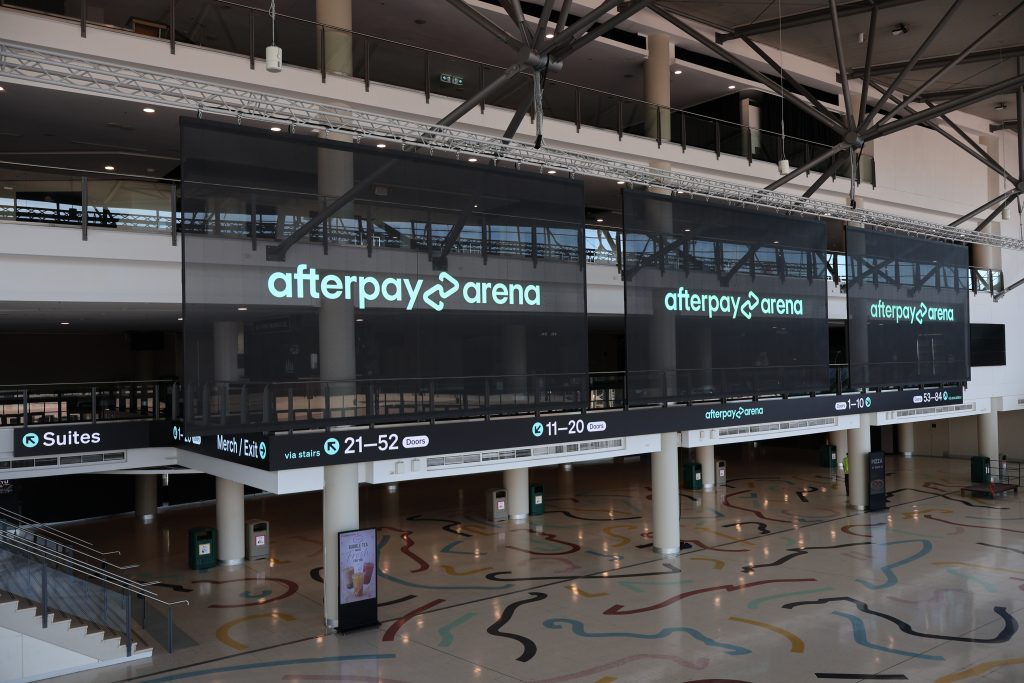
A recent example of COB technology in practice is the venue-wide LED upgrade delivered by Outsource Resource at Afterpay Arena in Sydney. Alongside three large-scale transparent LED displays, P1.5 COB ribbon LED was installed throughout the Grand Foyer and Secondary Entry, creating 57 metres of continuous digital display across five runs.
The fine pixel pitch provides the clarity required in an indoor environment where visitors experience the displays at relatively close viewing distances, while the ribbon format allows digital content, wayfinding and sponsor messaging to integrate into the architecture of the venue. It's a good example of LED technology being selected around the environment, viewing distance and intended use rather than specification alone.
GOB and COB are both strong options for modern fine-pitch indoor LED.
The important question isn't simply which technology is better? It's which technology is right for the space?
At Outsource Resource, we consider viewing distance, screen dimensions, content, environment and project requirements before recommending an LED solution.
The best LED display isn't necessarily the one with the finest pixel pitch or highest specification. It's the one that's been specified correctly for how it will actually be used.
Speak with the experts at Outsource Resource about your next LED project.
Get in touch today to explore how Outsource Resource can bring your digital signage vision to life.


Outsource Resource delivers complete signage solutions. From concept through to manufacture and installation, we handle everything. Backed by a guarantee of quality, compliance, and value at every stage of the project.