Braille Signs Disability Support Guide

Compliant Braille Signage Solutions in Australia

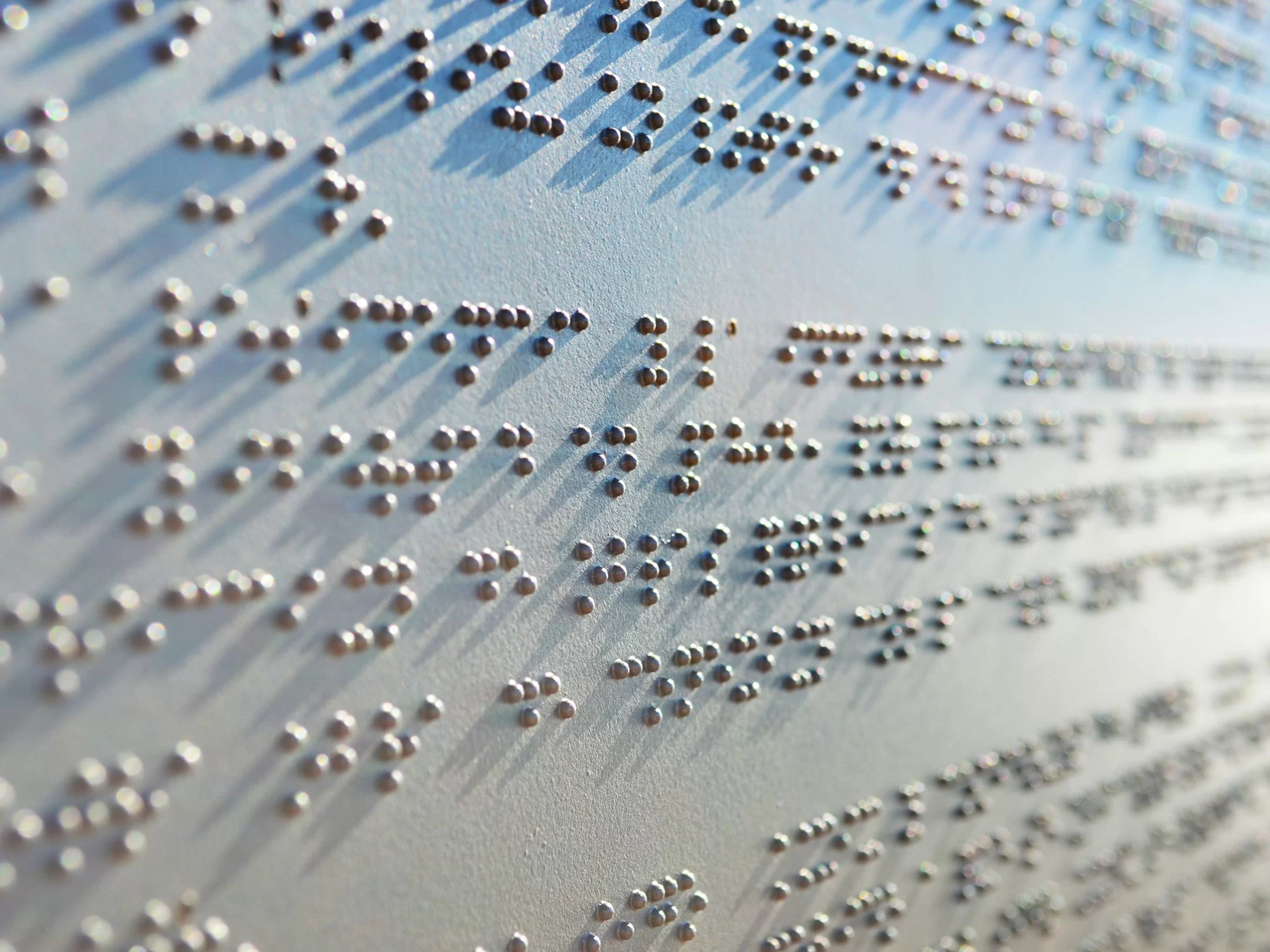
Braille signage plays a crucial role in making spaces accessible for people with vision impairments, ensuring they can navigate independently and safely. Designed for public buildings, schools, transport hubs, and healthcare facilities, these tactile signs combine compliance with functionality, making wayfinding effortless while meeting Australian accessibility standards.

Whether for interior directories, restroom markers, or outdoor wayfinding, Braille signage promotes inclusion, safety, and legal compliance, ensuring every visitor feels welcome and supported.

Tailored Braille Signage Solutions

Braille Signage
Braille Signage

What We Deliver

Compliance Simplified: Approved Braille placement, contrast standards, and pre-packaged council submissions for faster approvals.
Durable Materials: Scratch-resistant finishes for hospitals, UV-protected coatings for outdoor spaces, and tamper-proof designs for high-traffic areas.
Cost-Effective Solutions: Smart design choices and bulk sourcing lower costs without compromising compliance or quality.
Completely Customisable: Unique designs, colours, and shapes tailored to architectural features, modernising standard off-the-shelf signage.

Let’s get started

Whether you’re looking for a signage solution or a way to expand your business through our partnership network, we’re here to help. Contact us today and let Outsource Resource show you a new, smarter and more efficient way to do signage.

icon
Get in Touch

Frequently Asked Questions

Yes. We coordinate the supply of compliant tactile and braille signage through trusted Australian manufacturers who specialise in accessibility signage for commercial and public environments.

Tactile and braille signs must meet strict requirements under the National Construction Code (NCC) and relevant Australian Standards to pass building inspections. Specifications typically govern elements such as braille dot formation, character height, contrast, placement, and material durability. Non-compliant signage can result in approval delays and costly replacements, making expert specification essential.

We work with experienced suppliers who understand these regulatory requirements and manufacture tactile signage designed for long-term performance. Production methods such as injection moulding help ensure braille dots remain secure over time, while durable metal options are often selected for high-traffic areas where resilience is critical.

By partnering with established accessibility signage specialists, we help ensure tactile and braille signage is compliant, professionally finished, and integrated seamlessly into the broader wayfinding system.
Yes. Our braille signage is manufactured to comply with the National Construction Code (NCC) and Australian Standard AS 1428.1, which govern accessibility requirements for buildings throughout Australia.

While the Americans with Disabilities Act (ADA) applies in the United States, Australian projects must follow local regulations. Australian braille signage typically uses Grade 1 braille and must meet strict specifications covering tactile character height, braille dot formation, contrast, symbol requirements, and installation positioning. Signage designed for ADA compliance alone will not satisfy Australian building approval requirements.

We work exclusively with suppliers who specialise in compliant tactile and braille signage for the Australian market. These manufacturers understand the regulatory landscape and can provide documentation confirming their products meet NCC and Australian Standards, supporting a smooth inspection process with building surveyors and certifiers.

Ensuring compliance from the outset helps reduce approval risks, avoid costly rework, and deliver accessible environments that support safe and independent navigation for all users.
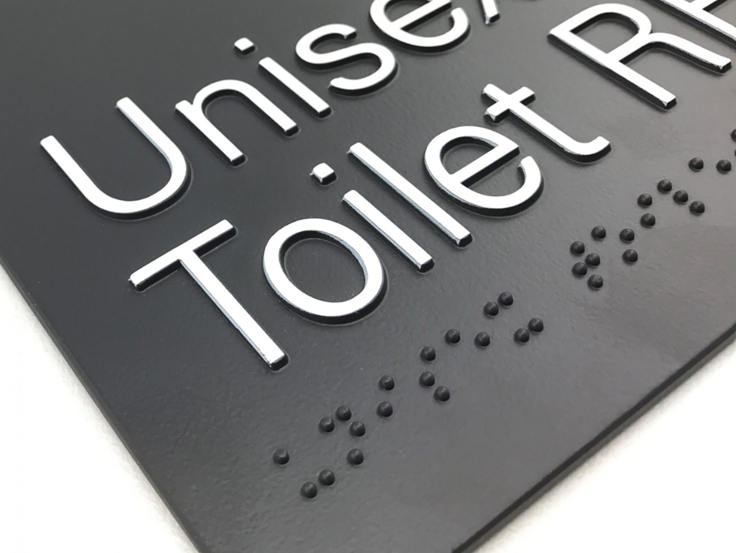
Yes. Most tactile signage combines raised text, braille, and recognised pictograms to support clear and accessible navigation.

Raised lettering allows people with low vision to read signs by touch, while braille provides essential information for those who are blind. Symbols such as accessibility and hearing loop icons help communicate important messages quickly and universally.

To remain effective, tactile elements must follow strict design principles including character height, font selection, symbol sizing, and placement. These features work together to ensure signage is easy to interpret for all users.

Custom pictograms can also be incorporated where required, provided they clearly represent the same information as the accompanying text and braille. We work with experienced manufacturers to deliver tactile signage that is durable, professionally finished, and seamlessly integrated into the overall wayfinding system.
Tactile signage is manufactured using robust materials and proven fabrication methods to maintain clarity, hygiene, and long-term performance in high-contact environments.

High-quality tactile and braille signs are often produced using advanced processes such as injection moulding or photopolymer, creating a solid, seamless surface that helps ensure raised characters and braille dots remain secure over time. Aluminium and other engineered materials are also commonly specified for areas exposed to heavy use or potential impact due to their strength and stability.

Finishes are carefully selected to reduce glare and provide strong visual contrast, supporting readability for people with low vision. For exterior applications, materials must withstand UV exposure, moisture, and temperature fluctuations without fading, cracking, or corroding. Coastal or high-exposure locations may require additional protective treatments to maximise lifespan.

By selecting appropriate materials during the design phase, tactile signage can remain durable, legible, and visually consistent for many years while integrating seamlessly into the broader wayfinding system.
Yes. We help guide clients through the signage requirements commonly associated with bathrooms, public amenities, and shared spaces, ensuring the correct signage is specified early in the project.

Accessibility signage must follow clearly defined placement and design principles, including mounting height, positioning, and the use of appropriate symbols for different facility types. For example, standard amenities, accessible bathrooms, and ambulant facilities each require distinct signage, while directional signs may be necessary to guide visitors to the nearest accessible services when they are not immediately visible.

Our experienced manufacturing partners understand these requirements and can support the delivery of compliant, professionally finished signage for typical installations. For larger developments or more complex environments, additional input from building surveyors or accessibility consultants may be recommended to confirm project-specific obligations.

By considering regulatory requirements during the design phase, projects can avoid delays, reduce the risk of rework, and ensure public areas remain clear, accessible, and easy to navigate for all users.
© 2026 Outsource Resource | Sitemap | Site Hosted by Thrive