Statutory signage requirements vary depending on building type, use, and layout, but several categories are commonly required across most commercial and public environments.
Fire and life safety signage is typically the largest category. This includes illuminated exit signs, fire door identification and instruction signage, fire extinguisher and hose reel markers, and emergency equipment location signs. Fire door signage, in particular, must meet strict wording, placement, and visibility requirements to pass inspection.
Evacuation and egress signage is also essential. These signs guide occupants toward exits and designated assembly points, supporting safe movement during emergencies. Clear, consistent placement is critical to ensure signage remains effective in high-stress or low-visibility situations.
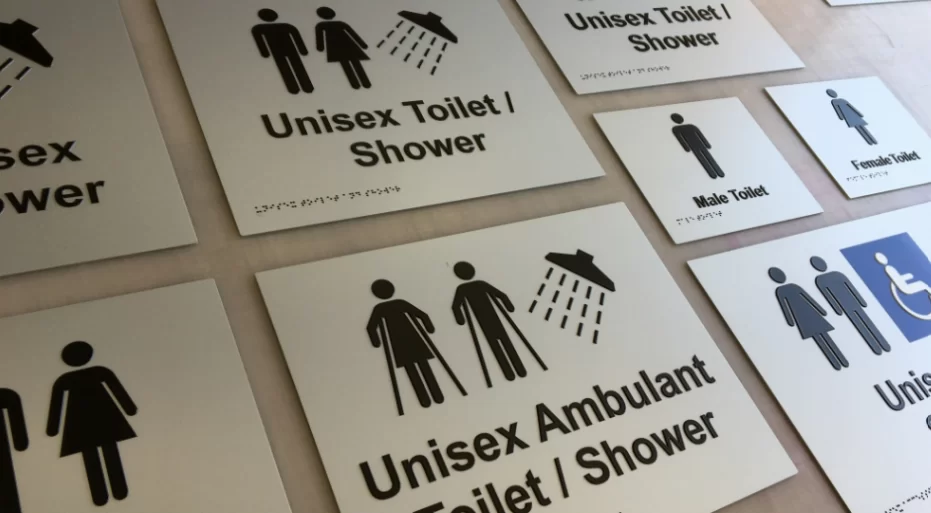
Accessibility signage is commonly required in public buildings and includes indicators for accessible parking spaces, toilets, lifts, and entrances. Tactile and braille signage is often required at key locations such as lift controls, accessible amenities, and primary doorways to support inclusive access.
Workplace health and safety signage depends on how the building is used. Office environments may require basic safety and electrical signage, while industrial or operational facilities often require additional hazard warnings, equipment identification signs, chemical storage notices, and restricted access indicators.
To manage these requirements, we review building plans and coordinate a complete statutory signage schedule. This structured approach helps ensure all required signage is identified early, correctly specified, and installed without omissions that could delay approvals or occupancy.